Sustainable Agriculture South Africa (SAgri SA)
  • Home
  • About Us
  • Articles
  • Contact
  • Events
  • Home
  • About Us
  • Articles
  • Contact
  • Events

ARTICLES

All
Economy
Environment
Farm Management
Marketing & Finance
Politics & Policies
Rural Development
Sustainable Agricultural Practices

Biological Control of Plant Pathogens

16/6/2020

 
By Lize Reinecke
Picture
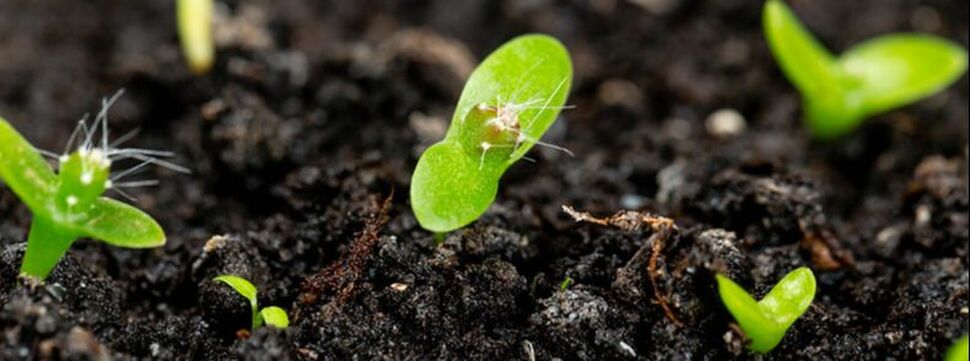
The photo is provided by Weebly . 
With the continuously growing human population, food and fodder are on increasing demand. Plant pathogens like bacteria and fungi are major threats to food security, and over the history of mankind many different solutions to controlling them has been tested (Mérillon and Ramawat 2012).

Synthetic control of pathogens, like the use of chemicals has great impact on the environment, and the effect on human health. Synthetic control measures also have pathogens that develop resistance against it (Cui et el. 2019). Due to this negative impact, alternative control measures like biological control is sought after (Mérillon and Ramawat 2012). Biological control is the destruction or inhibition of pathogens by other pathogens (Agrios 2005). Some of the species available to use for biocontrol purposes are Bacillus, Metarhizium, Pseudomonas and Trichoderma. In some circumstances, biological control agents even result in a higher crop yield than when the pathogens are treated with any other method (Cui et al. 2019) and also makes for a more sustainable agricultural future (De Silva et al. 2019).

Biocontrol agents are not only a more sustainable option, but it has other advantages as well. Some of these include their faster decomposition and lower toxicity to non-target species. Because they have various mode of actions, they are also more efficient against pathogens that are prone to develop resistance against synthetic pesticides (Marin et el. 2019).

Bacillus species:
This species inhabits a large variety of environments which are ideal since it can be applied in different ecological niches to target a variety of plant pathogens (Fira et al 2018). This bacterial species is present in air, soil, water and the rhizosphere (Connor et al. 2010), and can produce antimicrobial compounds and secondary metabolites (Stein 2005). Some of these antimicrobial compounds are compounds such as lipopeptides which has an inhibitory effect on the growth of plant pathogens (Wu et al. 2019).

Bacillus velezensis are the most common bacteria used as a biocontrol agent (Cui et al. 2020). The production of three different lipopeptides by B. velezensis are the main mode of antimicrobial action. These three lipopeptides are especially active against plant pathogenic fungi (like Aspergillus spp. and Fusarium spp.) that produces mycotoxins harmful to animals and humans (Liu et al. 2019).

The bacteria Bacillus thuringiensis is also widely used as a biocontrol agent. This is because this specific species has crystal-producing strains which have insecticidal properties. This bacterial species can be used to control both air- and soilborne pathogens like fungi and other bacteria either by competition (Mérillon and Ramawat 2012).

Metarhizium spp.:
Fungi are usually the culprits causing plant diseases, but it is not the case with Metarhizium spp. This is an entomopathogenic fungi which occurs in various habitats in different climates worldwide (Kryukov et al. 2019) and which is especially effective to use against grasshoppers. An entomopathogenic fungus colonizes and parasitize insects (Mérillon and Ramawat 2012).

Not only does this species of biocontrol fungi have a wide range of activity against various pathogens, but it also colonizes the rhizosphere, promotes plant growth and increase resistance to phytopathogens. The promotion of plant growth is due to the transfer of nitrogen from other dead insects to the plant, as well as rehabilitating nutrient deficient soil (Kryukov et al. 2019).

This fungus produces pathogenicity factors and chitinase which then breaks down the chitin walls within plant pathogenic insects (Francis 2019). It also has an enzyme which decomposes the proteins of nematodes acting as nematicides (Mérillon and Ramawat 2012). The number of spores needed to infect and kill 50% of an insect population within 10 days are only a 1000 (Mérillon and Ramawat 2012).

Pseudomonas spp.:
The bacterial species Pseudomonas fluorescens has only recently been discovered to have biocontrol characteristics. Controlling soil-borne pathogens has been a major problem throughout the years, but this new biocontrol agent might be the solution (Baehler et al. 2005). P. fluorescens are a siderophores, which causes this pathogen to have inhibitory effects on spore germination and mycelium formation (Abo-Zaid et al. 2020).

P. fluorescence has chloroform fractions which has significant activity against pathogenic bacteria and toxic fungi (Marrez et al. 2019). It is also a competitor for niche-based nutrients. This bacteria is, however, inconsistent in different environments so there us still a lot of research to be done on how to optimise the use of this biocontrol agent (Dutta et al. 2019).

Trichoderma spp.:
Trichoderma spp. are usually used to control fungal pathogens like Fusarium wilts (Hewedy et al. 2019). This fungus as biocontrol agent can successfully colonise soil and survive in it for up to a year (Xian et al. 2019) and acts in vitro (Mérillon and Ramawat 2012).

The Trichoderma spp. used as biocontrol are known for its effectiveness since this fungal species colonizes and grows aggressively in soil (Hewedy et al. 2019). It also has other mechanisms to control plant pathogens such as hyperparasitism and competition. This fungal genus also triggers induced resistance in the host plant and can enhance plant growth (Xian et al. 2019). It also is a mycoparasitic species which can act against fungi, and it also has been characteristic to be used against airborne diseases especially when integrated with chemical control (Mérillon and Ramawat 2012).
References
  1. Fira D, Dimkic I, Beric T, Lozo J, Stankovic S. 2018. Biological control of plant pathogens by Bacillus species. Journal of Biotechnology 285: 44-55.
  2. Connor N, Sikorski J, Rooney AP, Kopac S, Koeppel AF, Burger A, Cole SG, Perry EB, Krizanc D, Field NC, Slaton M, Cohan FM. 2010. Ecology of the speciation in the genus Bacillus. Applied Environmental Microbiology 76: 1349-1358.
  3. Cui L, Yang C, Wei L, Li T, Chen X. 2019. Isolation and identification of an endophytic bacteria Bacillus velezensis 8-4 exhibiting biocontrol activity against potato scab. Biological Control 141: 1-7.
  4. Stein T. 2005. Bacillus subtilis antibiotics: structures, syntheses and specific functions. Molecular Microbiology. 56: 845-857.
  5. Hewedy OA, Abdel-Lateif KS, Ramadan AB. 2019. Genetic diversity and biocontrol of indigenous Trichoderma isolates against Fusarium wilt of pepper. Journal of Basic Microbiology 60: 126-135.
  6. Xian HQ, Liu L, Li YH, Yang YN, Yang S. 2019. Molecular tagging of biocontrol fungus Trichoderma asperellum and its colonization in soil. Journal of Applied Microbiology 13: 255-264.
  7. De Silva NI, Brooks S, Lumyong S, Hyde KD. 2019. Use of endophytes as biocontrol agents. Fungal Biology Reviews 33: 133-148.
  8. Wu L, Shang H, Gu H, Zheng J. 2019. Bacterial iturins mediate biocontrol activity of Bacillus sp. against postharvest pear fruit-rotting fungi. Journal of Phytopathology 167: 501-509.
  9. Marin VR, Ferrarezi JH, Vieira G, Sass DC. 2019. Recent advances in the biocontrol of Xanthomonas spp. World Journal of Microbiology and Biotechnology 35: 1-11.
  10. Kryukov VY, Kabilov MR, Smirnova N, Tomilova OG, Tyurin MV, Akhanaev YB, Polengova OV, Danilov VP, Zhangissina SK, Alikina T, Yaroslavtseva ON, Glupov VV. 2019. Bacterial decomposition of insects post-Metarhizium infection: Possible influence on plant growth. Fungal Biology 123: 927-935.
  11. Francis JR. 2019. Biocontrol potential and genetic diversity of Metarhizium anisopliae lineage in agricultural habitats. Journal of Applied Microbiology 127: 556-564.
  12. Liu Y, Teng K, Wang T, Dong E, Zhang M, Tao Y, Zhong J. 2019. Antimicrobial Bacillus velezensis HC6: production of three kinds of lipopeptides and biocontrol potential in maize. Journal of Applied Microbiology 128: 242-254.
  13. Maehler E, Bottiglieri M, Pechy-Tarr M, Maurhofer M, Keel C. 2005. Use of green fluorescent protein-based reports to monitor balanced production of antifungal compounds in the biocontrol agent Pseudomonas fluorescens CHA0. Journal of Applied Microbiology 99: 1-11.
  14. Marrez DA, Abdel-Rahman GN, Salem SH. 2019. Evaluation of Pseudomonas fluorescens extracts as biocontrol agents against some foodborne microorganisms. Jordan Journal of Biological Sciences 12: 535-541.
  15. Abo-Zaid GA, Soliman NA, Abdullah AS, El-Sharouny EE, Matar SM. 2020. Maximization of siderophores production from biological control agents: Pseudomonas aeruginosa F2 and Pseudomonas fluorescens JY3 using batch and exponential fed-batch fermentation. Processes 8: 1-21.
  16. Dutta S, Yu SM, Jeong SC, Lee YH. 2019. High-throughput analysis of genes involved in biocontrol performance of Pseudomonas fluorescens NBC275 against gray mold. Journal of Applied Microbiology 128: 12-35.

Comments are closed.
Powered by Create your own unique website with customizable templates.
Photos from verchmarco (CC BY 2.0), verchmarco, NRCS Oregon, Lav Ulv, Rawpixel Ltd, JeepersMedia